

Best Transit Trackers: Apps and Sites That Show Which Planet Is Touching Your Chart Right Now
The best transit tracker is the one that shows the current sky against your own chart and tells you how long the contact lasts. Astro-Seek publishes the current planetary positions on one page and links its transit tools from there. Astro.com draws transit charts in its free chart selection and turns them into a personal daily horoscope. TimePassages puts the transits inside the app, wheel and aspect list included. Cafe Astrology writes the week and the month as forecasts, sign by sign. And Cosmic Patterns takes the transits of one month and reads them for your sign as a single pattern rather than a stream of alerts.
This comparison sorts them by what they show, whether they need your birth chart, what they cost, and whether they help you see the shape of a month or only the mood of a day.
What a transit is, and why the speed matters
A transit is a planet in the sky today making an aspect to a planet or angle in your birth chart. Every tracker computes the same sky; the difference is what it does with it. The one number that changes everything is speed. The Moon moves about 13 degrees a day and crosses your whole chart in a month. The Sun moves one degree a day and stays about 30 days in a sign. Mercury spends roughly three weeks in a sign when it is not retrograde, Venus about four, Mars six to seven. Jupiter takes about a year per sign, Saturn about two and a half years, Uranus about seven, Neptune about fourteen, Pluto between twelve and thirty-one depending on the sign.
That is why a transit alert is only half the information. Moon square your Venus is over by dinner. Saturn square your Venus visits three times over a year and a half. A good tracker shows the exact aspect; a good reading tells you which of the two you are living through and what a month of it looks like.
Astro-Seek: the current sky on one page, free
What it offers: Today's current planets and transits lists every planet's position right now, with retrogrades and sign changes, and links the site's transit chart tools for your own chart. It is the reference page many astrologers keep open.
Best for: Checking the sky in ten seconds, and learning what a transit chart looks like when you draw it against your natal wheel.
Trade-off: It shows and lists. It does not tell you which of the forty aspects on the screen is the one that matters this month, and it will not write the month for you.

Astro.com: transit charts and a personal daily horoscope built from them
What it offers: Astrodienst's free chart selection draws transit charts for any date against your birth data, and its free horoscopes include a personal daily horoscope that reads the current transits to your chart in written form.
Best for: Someone who wants the transit chart drawn properly and a written daily line that comes from it, without paying.
Trade-off: The daily is a day at a time and the chart is a chart. Putting the two together into "what is this month about" is your job.
TimePassages: transits inside the app, with the wheel behind them
What it offers: TimePassages mobile documents transit functions alongside its natal interpretation: the current transits to your chart, shown on the wheel and interpreted per aspect. The desktop editions go deeper for people who study.
Best for: Anyone who wants to see transiting Saturn at 2 degrees from their Moon, not read a sentence about being tired.
Trade-off: It interprets aspects one at a time. The month as a whole is not its unit, and the account and edition decide which functions you get.
Cafe Astrology: the week and the month, written for each sign
What it offers: This Week in Astrology walks through the week's transits day by day, and the forecasts page links weekly, monthly and yearly horoscopes for all 12 signs. Free, on the web, no account.
Best for: Reading the week's transits in plain writing without a chart in front of you.
Trade-off: It is sign-based, so it reads the transits against your Sun sign rather than your whole chart, and it lists the days rather than weighing them.
Cosmic Patterns Monthly Pattern Report: the month's transits, read for your sign
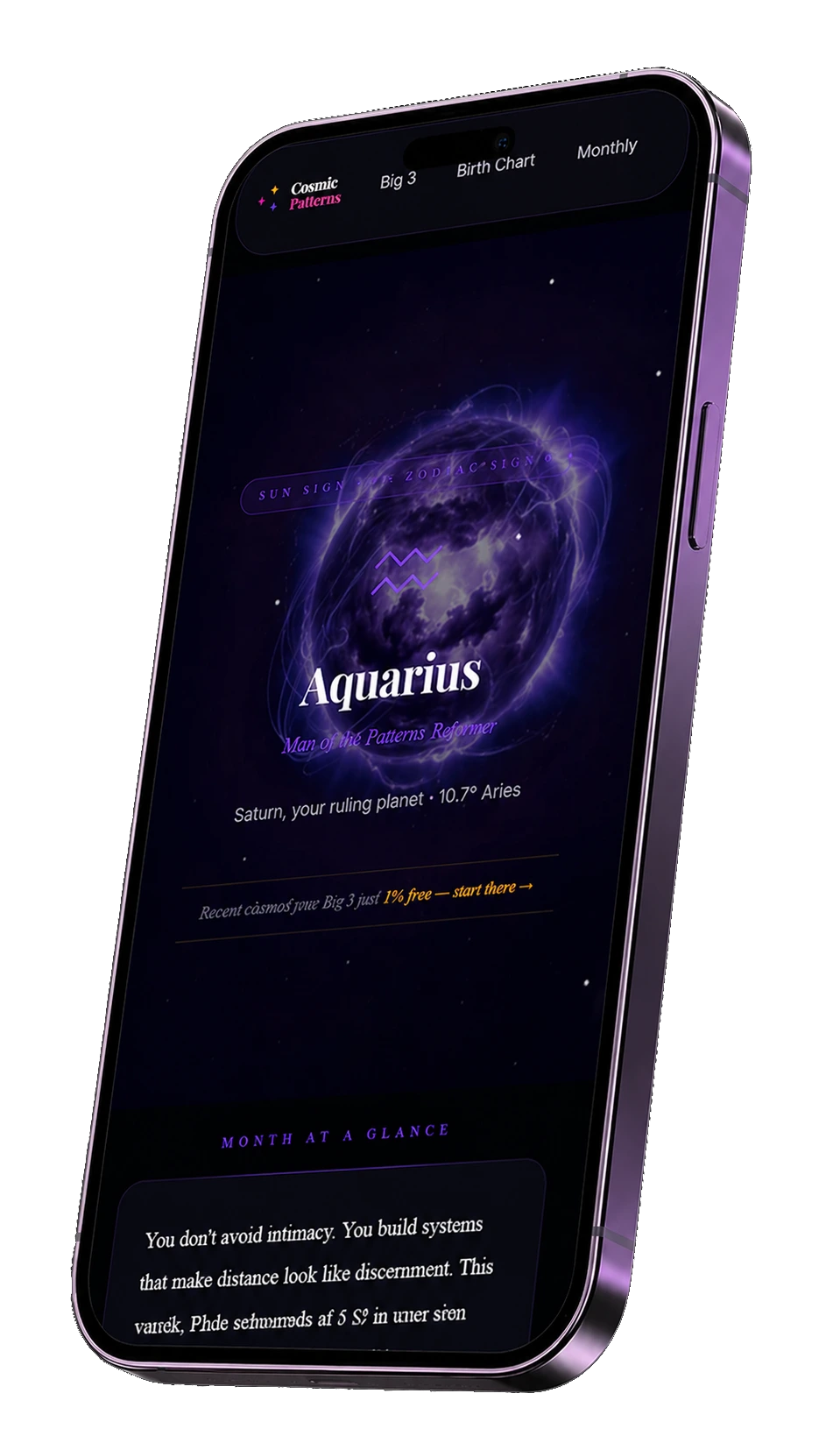
What it offers: The Monthly Pattern Report takes every transit hitting your sign this month, the Moon phases and the timing windows, and reads them as one pattern: where the month pushes, where it asks you to wait, which days carry the turn. It is written to be read at the start of the month and again in the middle. One edition, yours to keep, currently $1, down from $4.99, purchased once with no automatic renewal.
Best for: Someone who already has a tracker and is tired of forty aspects with no order. And for the person who wants to know which week matters before it arrives.
Trade-off: It is read for your sign, so it speaks to your Sun; the Birth Chart is where your whole chart is read. It is a month, not a live feed. Keep one of the trackers above beside it if you want the sky in real time.
Quick Comparison
How to use a transit tracker without drowning in it
- Sort by speed first. Anything from the Moon is today's weather. Anything from Jupiter outward is a season. Read the seasons before the weather.
- Look for exact degrees. A transit within one degree is happening; one at five degrees is approaching. Trackers that show the orb let you tell the two apart.
- Count the passes. Slow planets go retrograde, so the same aspect often returns three times. If a tracker shows the second pass, the first has already told you what the theme is.
- Watch the angles. Transits to your Ascendant and Midheaven need an accurate birth time. If yours is uncertain, treat those alerts as maybes.
- Read the month once, then check the days. A daily alert lands differently when you already know which week carries the turn.
Which one should you use?
If you want the sky right now for free, keep Astro-Seek's current planets open. If you want the transit chart drawn and a daily line from it, Astro.com. If you want to see the aspects on your own wheel, TimePassages. If you want the week written out for your sign, Cafe Astrology.
If you want the month read before it happens, start with the Monthly Pattern Report: every transit hitting your sign this month, gathered into one pattern with the days that carry the turn, yours to keep. Some part of you already knows which week you are bracing for; the report tells you why, and what the weeks around it are for.
If you have not met your own placements yet, begin with the free Big 3 reading. For the difference between a sign-based month and a chart-based transit reading, see monthly horoscope vs personal transit reading; for daily tools, the best daily horoscope apps; for the monthly landscape, the best monthly horoscope sites.
You have compared the places that publish a month in advance. Most of them write one month for everyone. The month you are about to live is not generic, and neither is the sign it lands on.
Your month is read before you live it: every transit that touches your sign, every moon phase, every shift that matters. The sky ahead, already leaning your way.
Monthly Pattern Report
Read this month's edition$4.99$1 · This month’s edition
frequently asked
What is the best free transit tracker?
Astro-Seek's current planets page shows the whole sky right now and links transit chart tools for your own chart. Astro.com draws transit charts for free and adds a personal daily horoscope built from them. Both are free and both need your birth data for anything beyond the general sky.
Do I need my birth time to track transits?
For transits to your planets, your birth date and place are usually enough, apart from the Moon on a day it changes sign. For transits to your Ascendant, Midheaven and house cusps you need an accurate birth time, because the angles move about one degree every four minutes.
How long does a transit last?
It depends on the planet. The Moon's transits last hours; the Sun's about two days; Mercury, Venus and Mars a few days each unless retrograde; Jupiter's a few weeks; Saturn's months, often in three passes over a year or more; Uranus, Neptune and Pluto can hold a degree for a year or two. Speed decides whether a transit is weather or a season.
Is a transit tracker better than a monthly horoscope?
They answer different questions. A tracker shows which planet touches which point today, exactly. A monthly reading weighs the month's transits into a shape: where it pushes, where it waits, which week carries the turn. Most people need the second to make sense of the first.
What does the Cosmic Patterns Monthly Pattern Report include?
One edition for this month, read for your sign: every transit hitting your sign this month, the Moon phases and the timing windows, gathered into a pattern with the days that matter. Purchased once for the edition with no automatic renewal, yours to keep. The current price is on the report page.
Cosmic Patterns
birth charts, Big 3, and the patterns you keep repeating.